Dodgers vs Los Angeles Angels Match Player Stats: How to Read the Box Score and Spot the Players Who Matter

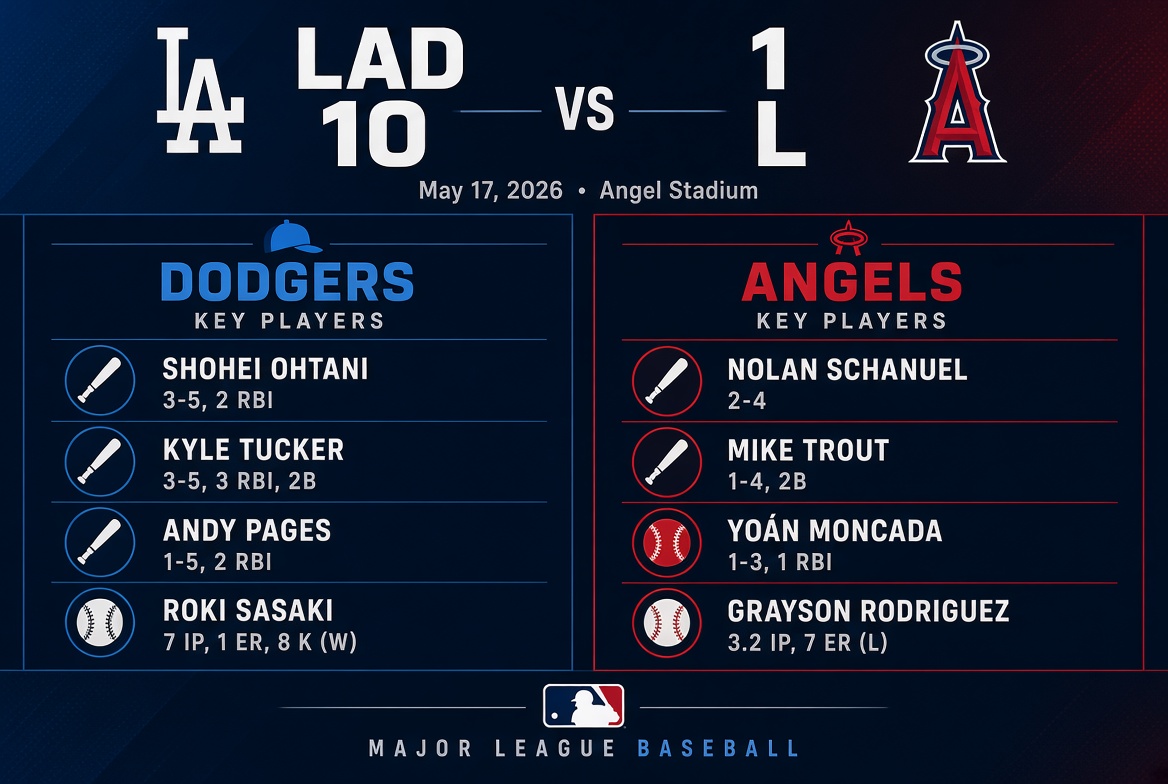
If you searched for dodgers vs los angeles angels match player stats, you probably want one of two things: the numbers from a specific game, or a way to make sense of those numbers once you find them. This guide covers both. It explains where the official stats live, what each column in the box score means, and which performances tell you the most about a Freeway Series game.
One note up front. Player stats change with every game, so this article does not list numbers from any single matchup. Printing figures from memory would risk giving you wrong ones. Instead, you will learn how to find accurate stats in seconds and how to read them like an analyst.
What “Dodgers vs Los Angeles Angels Match Player Stats” Actually Means
In short: it refers to the individual batting, pitching, and fielding numbers recorded by players from both teams in a single game, or across several games in a series.
Most people searching this phrase fall into three groups. Some want a quick box score after a game ended. Some want to know who hit the home run or who took the loss. Others want a broader comparison of how the two lineups and pitching staffs performed against each other over a season.
The difference matters because the best source depends on your goal. A fan who missed last night’s game needs a box score. A fantasy baseball player may want a season-long split. A casual reader may only want to know whether a star player had a good night. Each of those questions has a clear answer once you know where to look.
Why the Freeway Series Draws So Much Attention
The Dodgers and Angels share a city region, which gives their meetings a different feel from most interleague games. Fans often call the matchup the Freeway Series, a nickname tied to the highways that connect the two ballparks. You can read the history behind the rivalry on the Freeway Series page on Wikipedia.
The two clubs play in different leagues. The Dodgers compete in the National League West, while the Angels play in the American League West. Because of that, they only meet during interleague play, which usually means a small number of games each season, often split between both ballparks.
That small sample size is worth remembering when you read the stats. A player who goes 4-for-4 in a Freeway Series game had a great night, but a few games do not define a career or even a season.
A Quick Look at the Two Clubs
The table below gives context that helps when you compare player numbers across the two teams.
| Detail | Los Angeles Dodgers | Los Angeles Angels |
|---|---|---|
| League and division | National League West | American League West |
| Home ballpark | Dodger Stadium | Angel Stadium of Anaheim |
| Ballpark opened | 1962 | 1966 |
| Franchise origin | Brooklyn, 1880s | Los Angeles, 1961 |
| Designated hitter | Yes, universal rule since 2022 | Yes |
Both teams now use a designated hitter, so pitchers no longer bat in either ballpark. That removes a quirk that once made interleague box scores look very different depending on whose home field hosted the game.
Where to Find Official Player Stats After a Game
The most reliable place to check is the official MLB Gameday page for the game. It publishes the full box score, play-by-play, pitch tracking, and a scoring summary within moments of the final out. The Dodgers and Angels team websites also post box scores and recaps, and they are easy to reach from each team’s schedule page.
For deeper numbers, sites such as Baseball Reference and FanGraphs offer game logs, splits, and advanced metrics. These pages are especially useful if you want to compare how one player performed against a specific opponent over time.
When two sources show slightly different numbers right after a game, wait a short while. Official scorers sometimes review a hit or error ruling, and the stat can change by the next morning. If you are writing or betting based on the numbers, rely on the official MLB source and check it again after the game is final.
How to Read a Baseball Box Score
A box score looks crowded at first, but it follows the same pattern every time. It lists each hitter in batting order with a row of abbreviations, then lists each pitcher the same way. Once you know the abbreviations, you can scan a game in under a minute.
Batting Stats You Will See
Here are the columns that appear most often for hitters from both teams.
| Abbreviation | What It Means | Why It Matters |
|---|---|---|
| AB | At-bats | Official plate appearances, not counting walks or sacrifices |
| R | Runs scored | Shows who crossed home plate |
| H | Hits | Total base hits in the game |
| RBI | Runs batted in | Runs that scored because of the batter’s action |
| BB | Walks | Shows plate discipline |
| SO | Strikeouts | Times the batter struck out |
| HR | Home runs | Total home runs hit |
| AVG | Batting average | Season hits divided by at-bats |
A player’s single-game line is easy to read. For example, 3-for-5 with a double and two RBIs means three hits in five official at-bats, one of them a double, driving in two runs. The season average listed beside the name tells you how that game compares with the player’s usual output.
The decision column, listing the win, loss, save, or hold, sits below the pitching lines. A pitcher can pitch well and still not earn a win, since wins depend on when the lineup scores. That is why experienced fans look at innings, earned runs, and strikeouts before they look at the decision.
The Players Fans Usually Look For in Dodgers vs Angels Games
Rosters change every year through trades, free agency, injuries, and call-ups, so check the current lineup before you assume who played. Still, a few names have defined this matchup in recent years, and they explain why so many fans search for individual stats.
Shohei Ohtani is the most obvious one. He played for the Angels from 2018 through 2023, then signed with the Dodgers ahead of the 2024 season. That move gave the Freeway Series an added storyline, because fans now watch a player they once saw in an Angels uniform lead the Dodgers lineup. His box score line often draws extra attention for that reason alone.
On the Dodgers side, Mookie Betts and Freddie Freeman have been regular fixtures at the top of the order. For the Angels, Mike Trout has long been the face of the franchise, and his plate appearances against Los Angeles pitching are among the most watched in the series. Always confirm current rosters and injury status on the official team pages, since a player listed here may not appear in a given game.
When you compare these players, avoid judging them only by home runs. Look at on-base percentage, walks, and runs scored too, since they show how much a hitter contributed even without a big swing.
Which Stats Matter Most in a Single Game
A box score gives you dozens of numbers, but only a few usually explain the result. If you only have a minute, focus on these.
For hitters, start with runs batted in and hits. A hitter with multiple RBIs usually shaped the outcome of the game. Then check walks and strikeouts. A hitter who went 0-for-3 but drew two walks may have helped his team more than the line suggests.
For pitchers, start with innings pitched and earned runs. A starter who worked six or seven innings and allowed two or fewer earned runs gave his team a strong chance to win. Strikeouts and walks tell you whether the pitcher controlled the game or got by on luck and defense.
For relief pitchers, look at inherited runners and whether they stranded them. A reliever who entered with runners on base and escaped without a run may have saved the game, even if the box score shows only a single inning.
Advanced Numbers Worth Knowing
If you want to go beyond the basic columns, a few advanced stats add real value. On-base plus slugging, known as OPS, combines how often a hitter reaches base with how much power he shows. Pitchers are often judged by WHIP, which counts walks and hits allowed per inning. You can read a plain-language overview of these ideas in the Wikipedia entry on sabermetrics, which explains how analysts measure baseball performance beyond traditional stats.
These numbers work best over longer stretches. A single game rarely gives enough data for an advanced stat to mean much, so use them for season or series comparisons rather than one night.
How Ballpark and Matchup Context Changes the Numbers
Two ballparks host this series, and each plays a little differently. Dodger Stadium and Angel Stadium have different dimensions, weather patterns, and run environments. A fly ball that stays in the park on one field might clear the fence on the other, depending on conditions that day.
Day and night games matter too. Evening games in Southern California can bring cooler air that sometimes holds fly balls in the yard, while warmer afternoon games may help the ball carry. Because of this, a pitcher’s line from one stadium should not be compared to another stadium without keeping that context in mind.
Lineup construction also shifts the stats. A hitter who bats second sees more fastballs because the star behind him is dangerous. A hitter batting eighth may see more offspeed pitches and walk less. When a player’s numbers look odd in a particular game, check where he hit in the order and who followed him.
If you enjoy reading sports coverage that explains numbers in a relaxed style, the lifestyle and trending section at Buzznova is a good place to find readable roundups on popular topics.
Common Mistakes When Reading Player Stats
The first mistake is trusting one game too much. Baseball is a game of small samples, and a hitter can go hitless for a week and then hit three homers in a night. Judge a player by weeks and months, not a single box score.
The second mistake is confusing batting average with value. A .250 hitter who walks often and hits for power can be more valuable than a .300 hitter who rarely walks and hits singles. Always check on-base percentage and slugging alongside average.
The third mistake is ignoring defense. Errors appear in the box score, but good defensive plays often do not. A diving catch that saves two runs will never show up in a hitter’s line, yet it may have decided the game. Play-by-play pages help you catch these moments.
The fourth mistake is reading old stats as current. If you land on a page with a date several weeks old, you may be looking at a past matchup. Check the date and the final score before you quote any numbers.
Practical Ways to Follow Live Stats During the Game
If you want numbers as the game happens, open the MLB Gameday page or the official MLB app. Both update pitch by pitch and show live batting lines, pitch speeds, and exit velocities. Radio and television broadcasts add context, but the app gives you the raw data.
Fantasy players often keep a second tab open with player pages, so they can see how a hitter’s season line shifts after each plate appearance. If you track props or lineups, check the starting lineup card about an hour before first pitch. Teams sometimes rest players, and a late scratch changes the whole picture.
For a post-game recap, the best habit is simple: read the box score first, then the play-by-play, then a written recap. That order shows you the numbers, the story behind them, and the writer’s interpretation, in that sequence.
Conclusion
Dodgers vs Los Angeles Angels match player stats are easy to find and easy to read once you know the structure of a box score. Start with the official MLB page for the exact game, scan the hitting and pitching lines, and then check context such as ballpark, batting order, and sample size before drawing conclusions.
The most useful takeaway is to look beyond the headline numbers. Runs batted in, innings pitched, and earned runs tell you who shaped the result, while walks, on-base percentage, and strikeouts show the quality of the work behind it. Combine those with the history of the Freeway Series, and you will understand not just what happened in the game but why.
Frequently Asked Questions
Where can I find Dodgers vs Angels player stats for a specific game?
The official MLB Gameday page for that game has the full box score. The Dodgers and Angels team websites also post box scores, and Baseball Reference offers detailed game logs.
What is the Freeway Series?
It is the nickname for the Dodgers and Angels interleague games, named for the freeways connecting their ballparks in the Los Angeles area. The teams usually meet a few times each season.
Do the Dodgers and Angels play in the same league?
No. The Dodgers play in the National League West, and the Angels play in the American League West. They meet only during interleague play.
What does RBI mean in a box score?
RBI stands for runs batted in. It counts the runs that score because of a batter’s hit, walk, sacrifice, or other action at the plate.
Which pitching stat is most important in one game?
Innings pitched and earned runs allowed together give the clearest picture. Strikeouts and walks then show how much control the pitcher had.
Why do stats sometimes change after a game ends?
The official scorer can review a close call, such as a hit versus an error. These changes are usually small and settle by the next morning.
Is a single-game stat line a good way to judge a player?
Not by itself. Baseball has a lot of variance, so season or multi-week numbers are more reliable than one game.